When I was growing up. I recall having a cupboard above the phone where we stored our phonebooks, bills, pencils, and other odds and ends.
For some reason I was searching for something in that cupboard one night when I found a newspaper clipping of an article called, “The Meanest Mother in the World”
Being quite young, I read the article with just a bit difficulty and remember thinking, “Wow, my mom does all of this stuff.” when I got to the end, I didn’t appreciate the message of the article but rather thought it was some lame joke.
Still, I have never forgotten that article. For the message of the article has stuck in my mind. Through the years, my view of the ending has changed quite drastically. I get it now. Whether that be a little more maturity, life’s experience, gratitude towards my mother, or that fact that I am a mother myself, I am grateful for the ending… and for the message of the article that has stuck with me.
Rather than putting the whole article here, it can be googled if you wish to read it in it‘s entirety. It’s written by Bobbie Pingaro in 1967. See? I told you I was young :) But here is enough of it so you get the idea:
I had the meanest mother in the whole world. While other kids ate
candy for breakfast, I had to have cereal, eggs or toast.
My mother insisted upon knowing where we were at all times. You'd
think we were on a chain gang. She had to know who our friends were and
where we were going. She insisted if we said we'd be gone an hour, that
we be gone one hour or less--not one hour and one minute.
The worst is yet to come.
We had to be in bed by nine each night
and up at eight the next morning. We couldn't sleep till noon like our
friends. So while they slept-my mother actually had the nerve to break
the child-labor law. She made us work. We had to wash dishes, make
beds, learn to cook and all sorts of cruel things. I believe she laid
awake at night thinking up mean things to do to us.
She always insisted upon us telling the truth, the whole truth and
nothing but the truth, even if it killed us- and it nearly did.
By the time we were teen-agers, she was much wiser, and our life
became even more unbearable. None of this tooting the horn of a car for
us to come running. She embarrassed us to no end by making our dates
and friends come to the door to get us.
Our marks in school had to be up to par. Our friends'
report cards had beautiful colors on them, black for passing, red for
failing. My mother being as different as she was, would settle for
nothing less than ugly black marks.
As the years rolled by, first one and then the other of us was put
to shame. We were graduated from high school. With our mother behind
us, talking, hitting and demanding respect, none of us was allowed the
pleasure of being a drop-out.
My mother was a complete failure as a mother.
Out of four children, a couple of us attained some higher education.
None of us have ever been arrested, divorced or beaten his mate.
Each of my brothers served his time in the service of this country. And
whom do we have to blame for the terrible way we turned out?
You're right, our mean mother.
Look at the things we missed. We never got to march in a
protest parade, nor to take part in a riot, burn draft cards, and a
million and one other things that our friends did.
She forced us to grow up into God-fearing, educated, honest adults.
Using this as a background, I am trying to raise my three
children. I stand a little taller and I am filled with pride when my
children call me mean.
Because, you see, I thank God, He gave me the meanest mother in
the whole world.
Last year around this time, I wrote a tribute to my mother in my post for Mother’s Day. I bring up this article now because as Mother’s Day rolls around, I not only think of my dear angel mother and all that she tried so earnestly to teach me, I think of myself being a mother and what I have tried to teach my own children. Have some of my mother’s traits passed from one generation to the next?
Am I the meanest mother in the world? There are certainly days when my children would vigorously nod their heads. Surely I had my days when I felt like I was the meanest mother in the world. We, together as a family have been on a learning curve since day one. However, I did have my mother as a wonderful example and I thank my Father up above that I had her footsteps to follow and to help me on my path.
As I reflect over the years of being a mother, I get teary eyed and my heart swells. My children are my pride and joy. They are truly the miracles in my life. Now I have a daughter and a grandson to add to my mother and grand-motherhood. What more could I ask for?
As the saying goes, (maybe I have tweaked it just a bit) but,
“Some of the greatest blessings in my life call me Mother “
I love being a mother (and grandma). There have been times that I have been accused of being the meanest mother in the world, and well, though I don’t cherish the name, ”meanest” because it carries a negative connotation, after this article, maybe it has a positive significance.
If that’s what taught my children to be all that they can possibly be-- and I learned it from a mother who taught me some very valuable life lessons about being the best that I can be, maybe the lessons and the teacher aren’t so mean after all.
May we all be the meanest mother in the world with the most honorable actions and intentions.
Happy Mother’s Day!
Wednesday, May 4, 2011

Monday, May 2, 2011
Book Reveiw
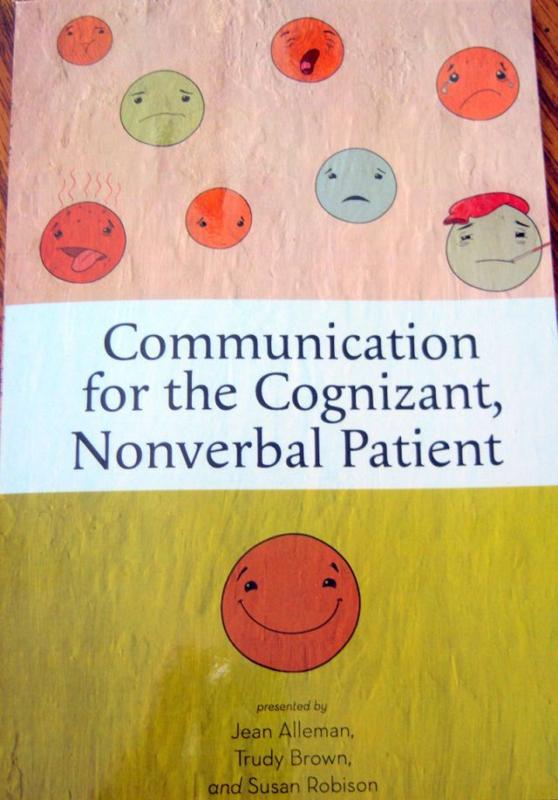
Through my dear friend Cheri Crane, I learned of a special book and I was immediately intrigued. Now that I’ve read it, I am so impressed, I thought I would pass word on. I would highly recommend this book to everyone. (Seriously, everyone should have a copy of this.)
There are three friends of Cheri’s, all of whom were sisters. Their names are Susan, Jean, and Trudy.
Their mother had declining health and had therefore spent a lot of time in various hospitals. Though the mother had a mind that was sharp and very much in tact, her speech had worsened to the point that her she no longer could convey her needs. Often times family members had to try to translate to the hospital staff for her because they could no longer understand what her wants and needs were. It became extremely frustrating for everyone involved.
One sister reported that on more than one occasion their mother would ring for assistance only to be walked out on and left in tears because the hospital staff couldn’t understand what she wanted or needed.
Their mother eventually passed away.
It was only a few short years later that this family learned that their brother in law ( one of the three sister’s husband) had been diagnosed with Lou Gehrig’s disease. While his mind stayed intact, his body was deteriorating. Speech was one of the things affected. Determined not to go through the suffering and frustration that they had experienced while their mother was a patient as she tried to express simple and basic needs, one sister was determined to find a way to help.
After much prayer and meditation, ideas began to form.
If they could write down simple sentences and he could point to that sentence, they’d know what he needed. The letters would be big enough for eyes that might find it hard to read and could be made out clearly. There would be icons with simple pictures for easy detection. All of this would be done in bright colors for cheerfulness, etc.
The sisters talked with each other and put it all their ideas together. As an end result, they came up with the book:
There are three friends of Cheri’s, all of whom were sisters. Their names are Susan, Jean, and Trudy.
Their mother had declining health and had therefore spent a lot of time in various hospitals. Though the mother had a mind that was sharp and very much in tact, her speech had worsened to the point that her she no longer could convey her needs. Often times family members had to try to translate to the hospital staff for her because they could no longer understand what her wants and needs were. It became extremely frustrating for everyone involved.
One sister reported that on more than one occasion their mother would ring for assistance only to be walked out on and left in tears because the hospital staff couldn’t understand what she wanted or needed.
Their mother eventually passed away.
It was only a few short years later that this family learned that their brother in law ( one of the three sister’s husband) had been diagnosed with Lou Gehrig’s disease. While his mind stayed intact, his body was deteriorating. Speech was one of the things affected. Determined not to go through the suffering and frustration that they had experienced while their mother was a patient as she tried to express simple and basic needs, one sister was determined to find a way to help.
After much prayer and meditation, ideas began to form.
If they could write down simple sentences and he could point to that sentence, they’d know what he needed. The letters would be big enough for eyes that might find it hard to read and could be made out clearly. There would be icons with simple pictures for easy detection. All of this would be done in bright colors for cheerfulness, etc.
The sisters talked with each other and put it all their ideas together. As an end result, they came up with the book:
Communication for the Cognizant, Nonverbal Patient
The book was a success, there was a huge difference between their experience with the brother in law and the mother.
This book is very simple and easy to use. It’s designed to be used for those who have lost their ability to communicate verbally and gives them their voice back only to be heard in another way.
I want to add my personal experience and opinion about this book.
I have been a caretaker in a couple of different capacities. I know through experience how difficult and frustrating it is for the patient to lie there and have all their freedom taken away-- to be solely dependant on others for their well-being. Especially if they were once independent and liked to be the one who took care of others themselves.
For the caretaker, it’s hard to guess what the patient’s wants or needs could be. To burden them with a million questions can be frustrating for you and for them as well as you try to figure out a way to make them more comfortable. Doing so without communication skills can be not only frustrating, it can be stressful and even scary. In a patient’s most challenging times, you want to do all that you possibly can in such difficult circumstances. But without communication it can seem nearly impossible.
My grandmother is now 101. She is sharp and witty yet her health is declining. She has had strokes and other ailments that are causing her to lose clarity of speech. Her age is taking a toll on her dear sweet body. She lives in Denmark. We have decided to send this book to my aunt to help them communicate more easily with her. Though the book is in English, and my grandmother only speaks Danish, the pictures are universal and the words are in simple, large print, that it will allow my aunt to translate. I believe this book is just what they need. I hope to hear of their success with it.
I briefly told you the story behind the book taken from the introduction. You can read more about it for yourselves. It’s a very touching story. This family experienced many personal challenges and through their heartaches, loss, and absolute dedication and courage to their loved ones, a wonderful book has come forth to help us give those who have lost their voice another way to express themselves.
To order this book go to
www.mycompanionvoice.com
Or to see more you can visit My Companion Voice
www.facebook.com and click “like”
The book was a success, there was a huge difference between their experience with the brother in law and the mother.
This book is very simple and easy to use. It’s designed to be used for those who have lost their ability to communicate verbally and gives them their voice back only to be heard in another way.
I want to add my personal experience and opinion about this book.
I have been a caretaker in a couple of different capacities. I know through experience how difficult and frustrating it is for the patient to lie there and have all their freedom taken away-- to be solely dependant on others for their well-being. Especially if they were once independent and liked to be the one who took care of others themselves.
For the caretaker, it’s hard to guess what the patient’s wants or needs could be. To burden them with a million questions can be frustrating for you and for them as well as you try to figure out a way to make them more comfortable. Doing so without communication skills can be not only frustrating, it can be stressful and even scary. In a patient’s most challenging times, you want to do all that you possibly can in such difficult circumstances. But without communication it can seem nearly impossible.
My grandmother is now 101. She is sharp and witty yet her health is declining. She has had strokes and other ailments that are causing her to lose clarity of speech. Her age is taking a toll on her dear sweet body. She lives in Denmark. We have decided to send this book to my aunt to help them communicate more easily with her. Though the book is in English, and my grandmother only speaks Danish, the pictures are universal and the words are in simple, large print, that it will allow my aunt to translate. I believe this book is just what they need. I hope to hear of their success with it.
I briefly told you the story behind the book taken from the introduction. You can read more about it for yourselves. It’s a very touching story. This family experienced many personal challenges and through their heartaches, loss, and absolute dedication and courage to their loved ones, a wonderful book has come forth to help us give those who have lost their voice another way to express themselves.
To order this book go to
www.mycompanionvoice.com
Or to see more you can visit My Companion Voice
www.facebook.com and click “like”
Wednesday, April 20, 2011
Affliction
As I try to gather my thoughts together to write this blog, my mind keeps wandering to my family and friends. Many of them are suffering from all types of struggles and afflictions.
Although I recognize that trials of heartache, illness, and devastation is worldwide-- especially in these latter days-- it seems within our own circle of loved ones adversity affects each of us in one form or another in quite an abundance.
As I ponder this thought of why adversity is so prevalent, I am reminded of two quotes from this last General Conference, both given by President Uchtdorf. The first is, “Comfort the afflicted, afflict the comfortable.” The second quote is, “Answers don’t always come when we are on our knees, but when we are on our feet.”
The Parable of the Good Samaritan comes to mind…
When the Priest and the Levite saw the man who had been robbed and wounded laying by the roadside, they passed him by. They even crossed to the other side to avoid him. Yet, the Samaritan who was thought to be an enemy of the man, was the one who made the greatest sacrifices and helped him in his time of need. He gave comfort to the afflicted.
As for Pres. Uchtdorf’s second part of the quote, “… afflict the comfortable.” I suppose this can be taken in many ways depending on where the listener of the talk is in their life. One of my thoughts was that I believe many of us, myself included, can become too complacent in our lives if we are not careful. Should/Could we do more to help the afflicted? It’s an individual evaluation, I suppose. It’s a question I should ask myself frequently so that I don’t become too complacent and find myself not doing enough to “Comfort the afflicted.”
As for the second quote I mentioned, I believe it is a good reminder that some of our greatest blessings come when we are in the service of others. I know that when I am having a difficult time, the best way to forget myself is find ways to be of service to others
I need to thank all the Good Samaritans in my life, and believe me, there have been many. In times of my own affliction, it was such a blessing to have Samaritans to help me bear my burdens. I need to keep in mind all they have done and try to do likewise for others.
Although I recognize that trials of heartache, illness, and devastation is worldwide-- especially in these latter days-- it seems within our own circle of loved ones adversity affects each of us in one form or another in quite an abundance.
As I ponder this thought of why adversity is so prevalent, I am reminded of two quotes from this last General Conference, both given by President Uchtdorf. The first is, “Comfort the afflicted, afflict the comfortable.” The second quote is, “Answers don’t always come when we are on our knees, but when we are on our feet.”
The Parable of the Good Samaritan comes to mind…
When the Priest and the Levite saw the man who had been robbed and wounded laying by the roadside, they passed him by. They even crossed to the other side to avoid him. Yet, the Samaritan who was thought to be an enemy of the man, was the one who made the greatest sacrifices and helped him in his time of need. He gave comfort to the afflicted.
As for Pres. Uchtdorf’s second part of the quote, “… afflict the comfortable.” I suppose this can be taken in many ways depending on where the listener of the talk is in their life. One of my thoughts was that I believe many of us, myself included, can become too complacent in our lives if we are not careful. Should/Could we do more to help the afflicted? It’s an individual evaluation, I suppose. It’s a question I should ask myself frequently so that I don’t become too complacent and find myself not doing enough to “Comfort the afflicted.”
As for the second quote I mentioned, I believe it is a good reminder that some of our greatest blessings come when we are in the service of others. I know that when I am having a difficult time, the best way to forget myself is find ways to be of service to others
I need to thank all the Good Samaritans in my life, and believe me, there have been many. In times of my own affliction, it was such a blessing to have Samaritans to help me bear my burdens. I need to keep in mind all they have done and try to do likewise for others.
Wednesday, April 6, 2011
My Conference Tradition
One of my fondest memories as a child of General Conference was watching the Sunday sessions on TV with my dad and sisters.
Each time the Mormon Tabernacle Choir would sing one of their musical numbers, we’d all race to see who could pick my mom out of the choir members. She sang second alto and we’d be thrilled if we spotted her. How excited we’d get if the camera man would show a close up!
Years have come and gone, and now my mother has passed. I still love to listen to the choir during conference. I desperately long to see my mother sitting there singing with the choir, but I realize the sweet spirit that can be felt any time a hymn is sung at a meeting.
One thing that has not changed, is my tradition of watching the Sunday sessions of General Conference with my Dad. To this day, I may have my own family now, but we all know that Sunday sessions are saved to watch with Grandpa. The tradition continues.
As I sat and listened on Sunday afternoon, I glanced over at my eighty two year old father who was intently listening to the speaker. My heart was full. I was grateful for the blessing of having him around to watch conference with.
I certainly love General Conference for all the reasons that everyone else does-- for the learning, the growth, for the messages of inspiration and the words of encouragement, of course I could go on and on.
But I am also very grateful for what it means to me personally and the connection I feel with my family. It’s a time when we come together in one purpose, we feel just so close. I wouldn’t trade those moments for anything.
Each time the Mormon Tabernacle Choir would sing one of their musical numbers, we’d all race to see who could pick my mom out of the choir members. She sang second alto and we’d be thrilled if we spotted her. How excited we’d get if the camera man would show a close up!
Years have come and gone, and now my mother has passed. I still love to listen to the choir during conference. I desperately long to see my mother sitting there singing with the choir, but I realize the sweet spirit that can be felt any time a hymn is sung at a meeting.
One thing that has not changed, is my tradition of watching the Sunday sessions of General Conference with my Dad. To this day, I may have my own family now, but we all know that Sunday sessions are saved to watch with Grandpa. The tradition continues.
As I sat and listened on Sunday afternoon, I glanced over at my eighty two year old father who was intently listening to the speaker. My heart was full. I was grateful for the blessing of having him around to watch conference with.
I certainly love General Conference for all the reasons that everyone else does-- for the learning, the growth, for the messages of inspiration and the words of encouragement, of course I could go on and on.
But I am also very grateful for what it means to me personally and the connection I feel with my family. It’s a time when we come together in one purpose, we feel just so close. I wouldn’t trade those moments for anything.
Wednesday, March 23, 2011
It's All His Fault (The Villain Of Our Story)
In our family, we’re getting ready for a wedding shower. In my attempt to come up with a couple of ice breaker games that aren’t too silly or boring, I searched the internet, grabbed a book and started making notes.
The thing is, the notebook I grabbed was one I’ve had sitting at my bedside for almost a year. It’s been moved around my nightstand from side to side so once I had my notes on wonderful shower games, I looked through it to see why I have been shuffling this particular notebook around and not just putting it away where I would have normally stored it.
“Good grief!” says I, (to myself since no one else was listening) the notebook had all my notes I had taken from a writers conference I had attended last year. They always give you a binder to take notes in, but this notebook was one I had taken myself and set aside because it had some really great useful stuff in it that I could have been using this last year while attempting to write my next book. Why do I always do things the hard way?!?
In my last blog, I shared some things I learned from my other notebook.(The binder I mentioned) Now I’ll share some things I learned from this one. I believe Jeff Savage taught the class and titled it: Villains: Creating characters we love to hate.
The thing that stands out most in my mind is that he mentions a few things I have never considered before. For example: when I think of the bad guy in a story, I picture him with evil, cold looking eyes, a scar across the cheek, a days growth of beard on his dirty, unwashed, face and greasy long hair hanging in his eyes. Can you see him? Maybe that’s a little too stereotypical but you get what I mean, right?
According to Jeff’s idea of a bad guy, picture someone who is charismatic, devious and intelligent. Maybe he has a good side and a bad side with no conscience and feels justified in what they do.
Whoa! A good looking bad guy? Who woulda thought? Okay, some writer’s have, but as a reader, don’t you find that very intriguing? I believe it leaves room to question whether he really is the bad guy or if he is a supporting character put in the story to throw off the reader. In other words, it adds more people to the list of possible suspects for the “who dun nit” list. It keeps the reader guessing. As a reader no one likes to know the outcome by the end of the first couple of pages, right?
In this class, we learned that heroes and villains are very closely tied.
They are both ordinary men who desire extraordinary things. It’s the motives that separate the villains from the heroes.
There are so many more notes with valuable information on this topic. I could go on and on.
Another way to get your reader to understand your villain’s motives is to get the reader to view things from your villain’s eyes. What happened in his life that made him the way he is? What is his actions supposed to accomplish? I think this is where you can help the reader know your villain without stereotyping or merely making your bad guy “look the part”
I guess the point I wanted to make is that it is easy to stereotype a character. Getting inside the head of your character and seeing/showing what makes them tick will help them come alive on the pages of your book for your reader. Their looks and their actions will act as a guide and help the reader get to really know them.
In ending I wanted to share one last note I had taken from the class that stood out to me.
The best villains are like the heroes if the hero had taken a different path. They can make people and hopefully the reader believe their goal was worthy, that they have struggled with their decision.
After attending the class and reading my notes, my villain could use some work, but these ideas get me excited to try some new things. Thanks Jeff, for the great info!
The thing is, the notebook I grabbed was one I’ve had sitting at my bedside for almost a year. It’s been moved around my nightstand from side to side so once I had my notes on wonderful shower games, I looked through it to see why I have been shuffling this particular notebook around and not just putting it away where I would have normally stored it.
“Good grief!” says I, (to myself since no one else was listening) the notebook had all my notes I had taken from a writers conference I had attended last year. They always give you a binder to take notes in, but this notebook was one I had taken myself and set aside because it had some really great useful stuff in it that I could have been using this last year while attempting to write my next book. Why do I always do things the hard way?!?
In my last blog, I shared some things I learned from my other notebook.(The binder I mentioned) Now I’ll share some things I learned from this one. I believe Jeff Savage taught the class and titled it: Villains: Creating characters we love to hate.
The thing that stands out most in my mind is that he mentions a few things I have never considered before. For example: when I think of the bad guy in a story, I picture him with evil, cold looking eyes, a scar across the cheek, a days growth of beard on his dirty, unwashed, face and greasy long hair hanging in his eyes. Can you see him? Maybe that’s a little too stereotypical but you get what I mean, right?
According to Jeff’s idea of a bad guy, picture someone who is charismatic, devious and intelligent. Maybe he has a good side and a bad side with no conscience and feels justified in what they do.
Whoa! A good looking bad guy? Who woulda thought? Okay, some writer’s have, but as a reader, don’t you find that very intriguing? I believe it leaves room to question whether he really is the bad guy or if he is a supporting character put in the story to throw off the reader. In other words, it adds more people to the list of possible suspects for the “who dun nit” list. It keeps the reader guessing. As a reader no one likes to know the outcome by the end of the first couple of pages, right?
In this class, we learned that heroes and villains are very closely tied.
They are both ordinary men who desire extraordinary things. It’s the motives that separate the villains from the heroes.
There are so many more notes with valuable information on this topic. I could go on and on.
Another way to get your reader to understand your villain’s motives is to get the reader to view things from your villain’s eyes. What happened in his life that made him the way he is? What is his actions supposed to accomplish? I think this is where you can help the reader know your villain without stereotyping or merely making your bad guy “look the part”
I guess the point I wanted to make is that it is easy to stereotype a character. Getting inside the head of your character and seeing/showing what makes them tick will help them come alive on the pages of your book for your reader. Their looks and their actions will act as a guide and help the reader get to really know them.
In ending I wanted to share one last note I had taken from the class that stood out to me.
The best villains are like the heroes if the hero had taken a different path. They can make people and hopefully the reader believe their goal was worthy, that they have struggled with their decision.
After attending the class and reading my notes, my villain could use some work, but these ideas get me excited to try some new things. Thanks Jeff, for the great info!
Wednesday, January 12, 2011
It's In The Doing
I came across an inspirational thought I had to share.
“When our wagon gets stuck in the mud, God is much more likely to assist the man who gets out to push than the man who merely raises his voice in prayer-- No matter how eloquent the oration.
President Thomas S. Monson put it this way: “It is not enough to want to make the effort and to say we’ll make the effort…
It’s in the doing, not just the thinking, that we accomplish our goals. If we constantly put our goals off, we will never see them fulfilled.”
Pres. Dieter F. Uchtdorf, “Two Principals For Any Economy”
Ensign, Nov. 2009
Upon reading this quote, I couldn’t help but think what a wonderful message it gave and the important reminder it is-- “It’s in the doing, not just the thinking”
We have begun a new year. Many of us have set goals and resolutions for ourselves. Some may have set goals that have to do with their writing, others may be working on goals that focus on personal or spiritual growth, or whatever the case may be. This saying applies to all.
It’s not enough to want to make the effort, but it’s in the doing.
May we all have not only the desire to accomplish our goals in the coming year, but the will to do them!
Happy New Year!
“When our wagon gets stuck in the mud, God is much more likely to assist the man who gets out to push than the man who merely raises his voice in prayer-- No matter how eloquent the oration.
President Thomas S. Monson put it this way: “It is not enough to want to make the effort and to say we’ll make the effort…
It’s in the doing, not just the thinking, that we accomplish our goals. If we constantly put our goals off, we will never see them fulfilled.”
Pres. Dieter F. Uchtdorf, “Two Principals For Any Economy”
Ensign, Nov. 2009
Upon reading this quote, I couldn’t help but think what a wonderful message it gave and the important reminder it is-- “It’s in the doing, not just the thinking”
We have begun a new year. Many of us have set goals and resolutions for ourselves. Some may have set goals that have to do with their writing, others may be working on goals that focus on personal or spiritual growth, or whatever the case may be. This saying applies to all.
It’s not enough to want to make the effort, but it’s in the doing.
May we all have not only the desire to accomplish our goals in the coming year, but the will to do them!
Happy New Year!
Wednesday, December 29, 2010
Home of the Year
As I sit and look around me, I can’t help but see the dust covering the shelves. Darn, I meant to get to that. The dishes, though not stacked nearly as tall in the sink as they were when I went to work yesterday (that would be thanks to my finely trained husband) are still in need of a good washing. Oops, meant to get that done too. And the laundry… well, we won’t even go there, since it’s well hidden in the basement and no one needs to know of its condition except those of us who are trying earnestly to tackle it. (That too is on my to-do list)
By the description of my home, you can tell, it’s not the kind of home you’ll see in Better Homes and Gardens. Sure, I wish I had more time for better upkeep. It really is a bigger priority than I make it sound, but there are some nights I lay my head just happy in the thought that at least it’s clean enough that it’s reasonably straight and we don’t live in filth.
Still, isn’t it every woman’s dream to live in a spic and span home? I feel like I grew up in one, if memory serves me right.
But would I really like to live in the perfect model home? Hmmmm…. I’d have to think on that. On the one hand I would instantly say yes. As I mentioned, my mother was a brilliant housekeeper and there are times I wonder if she looks down on me and shakes her head in disappointment if I go too many days without running the vacuum around.
On the other hand, I may not get the Home of the Year award sponsored by some well known magazine, but I sure love that feeling of coming home; to my home, my comfortable home.
There are no classic works of art, but there are pictures of Christ and the Temples, and there are my family’s pictures hanging which reminds me of all that I love and all that are important to me.
Sure, I may look at magazines and dream of those clean spotless homes. But they never look lived in. They don’t look loved in. They aren’t homey and comfortable. I think I’ll stick with the one I have. After all, “We may not have it all together, but together we have it all.”
The past several months, I’ve had to work far too many hours. I was away from home way too much and too many things were neglected from the home front. I’m not just talking about housekeeping, but I felt I wasn’t doing enough in regards to my family. My husband really had to step in and pick up wherever I couldn’t.
But I had the luxury of spending a few days at home over the Christmas holiday. I had a sense of renewal. It was so wonderful to be home. There is no place I would rather be. I crave more of it.
To me, I don’t need a magazine to tell me what it takes to make a “Home of the Year.” My heart knows what it takes. I believe I have one. I couldn’t feel more grateful for that.
In the coming year, I vow to spend as much time there as I possibly can. (Then maybe while I am there I can do something about those dishes, clothes, and dust bunnies. I’m actually looking forward to it!) :)
By the description of my home, you can tell, it’s not the kind of home you’ll see in Better Homes and Gardens. Sure, I wish I had more time for better upkeep. It really is a bigger priority than I make it sound, but there are some nights I lay my head just happy in the thought that at least it’s clean enough that it’s reasonably straight and we don’t live in filth.
Still, isn’t it every woman’s dream to live in a spic and span home? I feel like I grew up in one, if memory serves me right.
But would I really like to live in the perfect model home? Hmmmm…. I’d have to think on that. On the one hand I would instantly say yes. As I mentioned, my mother was a brilliant housekeeper and there are times I wonder if she looks down on me and shakes her head in disappointment if I go too many days without running the vacuum around.
On the other hand, I may not get the Home of the Year award sponsored by some well known magazine, but I sure love that feeling of coming home; to my home, my comfortable home.
There are no classic works of art, but there are pictures of Christ and the Temples, and there are my family’s pictures hanging which reminds me of all that I love and all that are important to me.
Sure, I may look at magazines and dream of those clean spotless homes. But they never look lived in. They don’t look loved in. They aren’t homey and comfortable. I think I’ll stick with the one I have. After all, “We may not have it all together, but together we have it all.”
The past several months, I’ve had to work far too many hours. I was away from home way too much and too many things were neglected from the home front. I’m not just talking about housekeeping, but I felt I wasn’t doing enough in regards to my family. My husband really had to step in and pick up wherever I couldn’t.
But I had the luxury of spending a few days at home over the Christmas holiday. I had a sense of renewal. It was so wonderful to be home. There is no place I would rather be. I crave more of it.
To me, I don’t need a magazine to tell me what it takes to make a “Home of the Year.” My heart knows what it takes. I believe I have one. I couldn’t feel more grateful for that.
In the coming year, I vow to spend as much time there as I possibly can. (Then maybe while I am there I can do something about those dishes, clothes, and dust bunnies. I’m actually looking forward to it!) :)
Subscribe to:
Posts (Atom)